Lessons from Berlin: Micromobility Europe 2026

The Skyhook team recently returned from Micromobility Europe 2026 in Berlin, and while the conference itself was fantastic, some of our biggest takeaways came from simply experiencing the city.
This was Skyhook's second time attending MME, and it was exciting to see how much the industry has progressed in just a few years!
In 2023, many conversations centered around future plans for electrification. This year, we met several operators actively deploying charge docks, expanding e-bike fleets, and sharing real-world lessons from electrified systems already operating at scale.
But what really stood out was Berlin itself.
Bikes Own the City
One of our local partners took us to lunch and told us: "Bikers own the city."
It only took a few days exploring Berlin to understand that this was no understatement.
Bike lanes were everywhere. Not just painted lines squeezed onto the side of a road, but dedicated infrastructure integrated into nearly every major corridor. It wasn't just our imagination—Berlin has over 620 miles of bike lanes and cycling routes, with plans to expand the network even further. For every walking path there was an adjacent bike path. Cyclists moved efficiently throughout the city, and drivers clearly understood they were not the priority.
In fact, our partner explained that if a driver blocks a bike lane or fails to respect cyclists, the biking community tends to let them know about it. Let's just say... you don't want to be the car that upsets a cyclist in Berlin.
But perhaps the most surprising thing wasn't the infrastructure—it was the feeling.
We walked everywhere. Morning, afternoon, evening. We covered miles every day and almost never felt overwhelmed by the city around us. In fact, halfway through the trip, Bessie pointed out something we hadn't even noticed: we hadn't heard a single car horn.
And this wasn't because we were out exploring before the city woke up. This was Friday afternoon, right in the middle of busy intersections filled with cyclists, pedestrians, trams, and cars all moving together.
Somehow, it felt peaceful.
People were everywhere. Bikes were everywhere. Life was happening all around us. But instead of feeling rushed, stressful, or loud, the city felt calm.
Not empty streets.
Just streets designed for people.
Bikeshares Share
Another thing that stood out to us was the diversity of shared mobility options. Walking around Berlin, we saw Lime, Bird, Bolt, Voi, and Dott vehicles all sharing the same streets.
Unlike many North American cities where a single company wins an exclusive contract, Berlin seems to embrace a more open ecosystem. Multiple operators coexist, riders have choices, and the city focuses on making the whole system work.
The result is a micromobility culture that feels less like a pilot program and more like a normal part of everyday life.

Reclaiming Space for People
Another thing we noticed was how many areas had been reclaimed from cars.
Throughout the city, we encountered streets that had been converted into pedestrian zones filled with outdoor dining, public gathering spaces, and people simply enjoying the city.
Our friend explained that Berlin is actually actively looking for opportunities to reduce parking and reclaim space for people.
Instead of asking, "How do we fit more cars?"
The city seems to be asking: "How can we encourage less?"
Building More Resilient Cities
Another topic that came up over lunch was resilience.
Berlin experienced several significant power outages over the past year, and those events highlighted how dependent modern cities are on centralized infrastructure.
As cities continue to electrify, resilience becomes just as important as sustainability.
How do cities continue operating when the grid goes down and reduce their dependence on a single source of power?
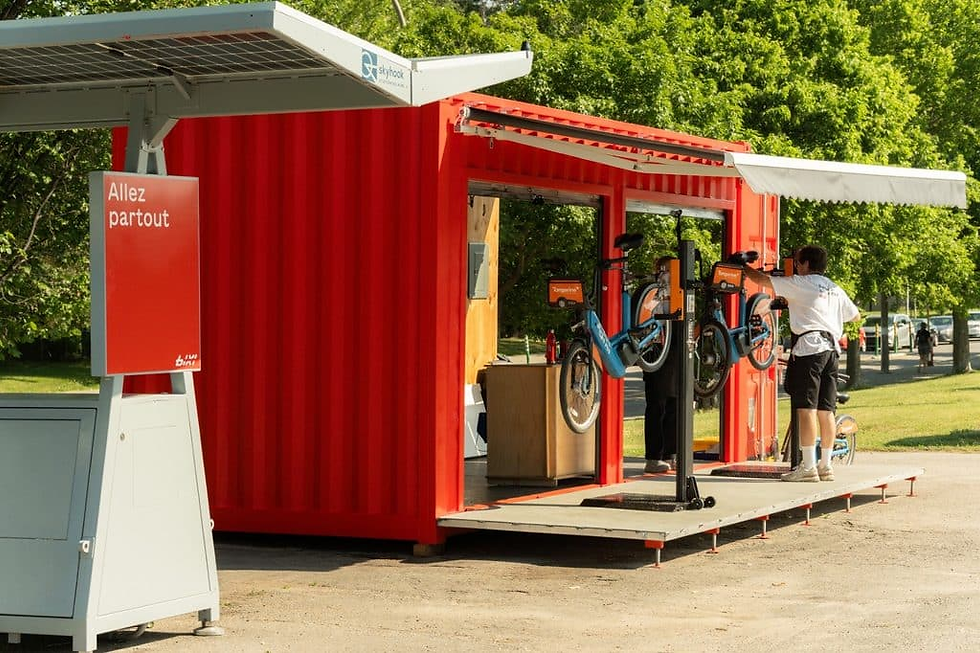
These are the types of questions many organizations are actively exploring, and solar might just be a part of the solution!
For us, it was exciting to see resilience becoming a bigger priority alongside electrification.

Looking Ahead
We left Berlin inspired.
Inspired by the operators finding creative ways to electrify mobility.
Inspired by a city that has made biking a legitimate transportation option.
Inspired by efforts to reclaim public space for people.
And inspired by conversations around building more resilient communities.
Micromobility Europe continues to be one of our favorite events because it provides a glimpse into what transportation can look like when cities commit to doing things differently.
We're excited to keep learning, keep collaborating, and continue helping cities and operators bring electrified mobility to more people around the world.
Until next time!

Comments